
Paar Autonomy builds the critical stack in an unmanned system that sees and decides, and enables autonomy in demanding conditions. The company designs and builds physical AI payloads, built around innovation in mechanical design and sensor fusion, which let a drone see, perceive and act autonomously by day and night. Its on-board software lets the drone navigate and complete a mission when GPS and the link to its operator are jammed. India buys most of this layer from Israeli, European and Chinese suppliers today. Paar was founded in Bengaluru in 2024 by Vignesh Sivaram Jayaraman to build this capability here, and we are very excited to lead the company's seed round of over ₹10 crore.

Context: The economic imbalance in defence
Over the last two years, one comparison has come up again and again in our conversations about defence: what it costs to stop a drone attack, against what it costs to build and deploy one. In the Red Sea, US Navy ships have used missiles that cost about $2 million each to bring down drones worth a small fraction of that. The Pentagon's chief weapons buyer put it simply to the US Senate in 2024: shooting down a $50,000 drone with a $3 million missile is not a good cost equation.
Closer home, on the night of 7 and 8 May 2025, Pakistan sent hundreds of drones at 30+ locations, from Leh to Sir Creek. And Ukraine, which went from about 10 drone makers in 2022 to more than 500 by 2025, used 117 small drones, carried into Russia in trucks, to strike bomber bases hundreds of kilometres from the front line.
Put together, the cost of defending has become far greater than the cost of attacking, and that changes how countries will need to defend themselves. We believe the next defence paradigm will be built primarily on four things:
- Cheap, replicable hardware that a country can build at home, at scale.
- Intelligence at the edge, so each system can see, navigate and act when GPS and communications are jammed.
- A decentralised structure, where large numbers of small, networked systems form the base of the defence stack, with fewer of the very large platforms like aircraft carriers and submarines, and no single loss is decisive.
- Speed and responsiveness, with software updated in weeks, days or, as in Ukraine, sometimes hours, as new use-cases are found.
Where the value is moving
In that world, the airframe becomes the cheaper and relatively commoditised part. The critical variable deciding whether a defence system delivers the job to be done is what it can see, and whether it can still make decisions once its links are cut. That is the layer Paar builds, and it is also the layer India has the least of today. We have capable drone makers and integrators, but the cameras and the intelligence on their platforms still largely come from abroad.
What Paar builds
Paar sells its hardware and software as one product, built on a unified architecture across different platform scales:
- Sentinel, a family of gyro-stabilised, electro-optic and infrared camera payloads, from ultra-lightweight units under 55g for FPV drones up to a 40x-zoom day/night system for tactical drones and loitering munitions.
- NorthStar, a visual navigation module that lets a drone maintain its trajectory and course without GPS.
- An on-board AI stack, powered by vision-language and small language models trained on Paar's proprietary aerial dataset, that takes instructions in plain language and turns them into actions, with no connection to a server.
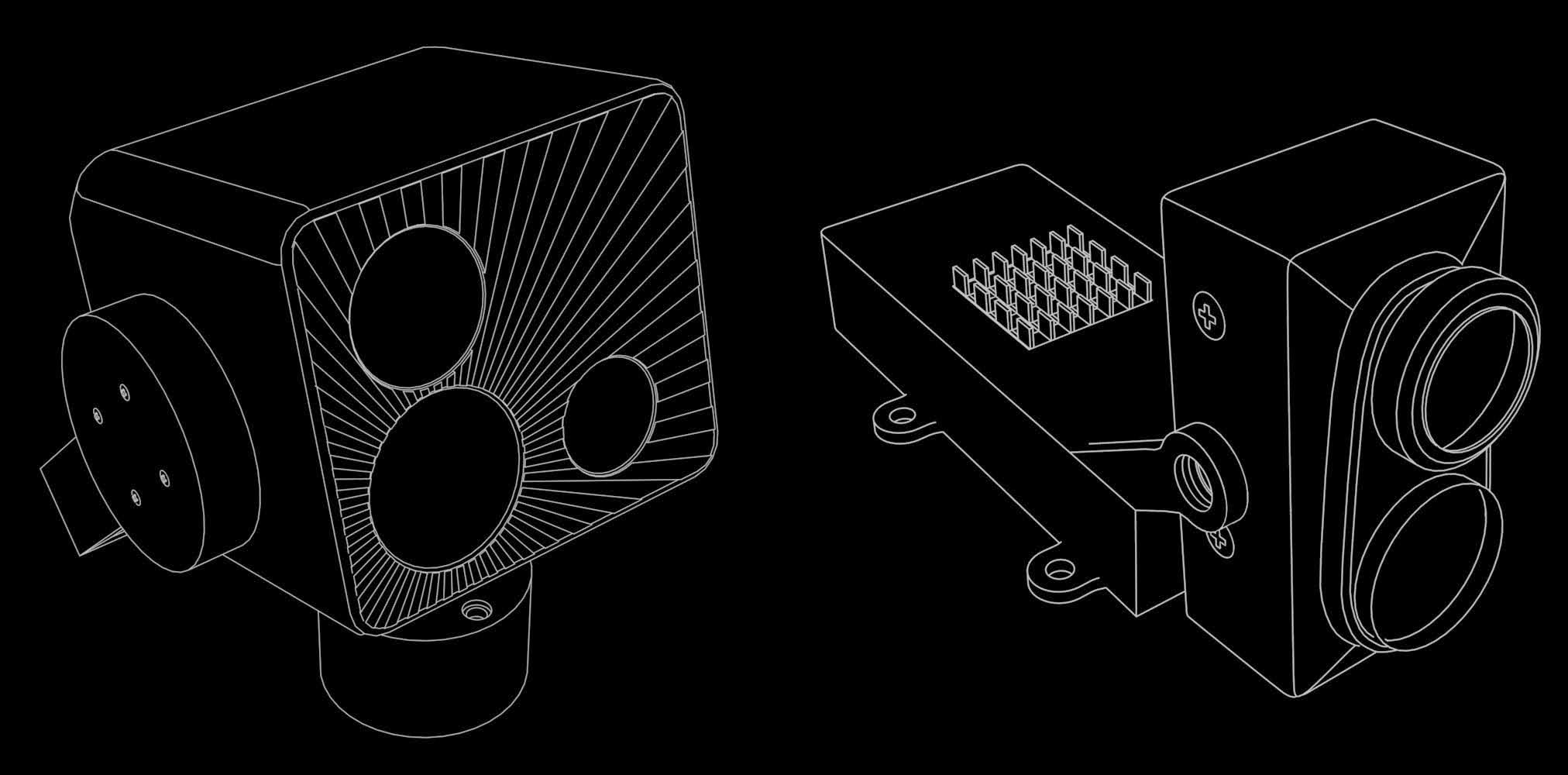
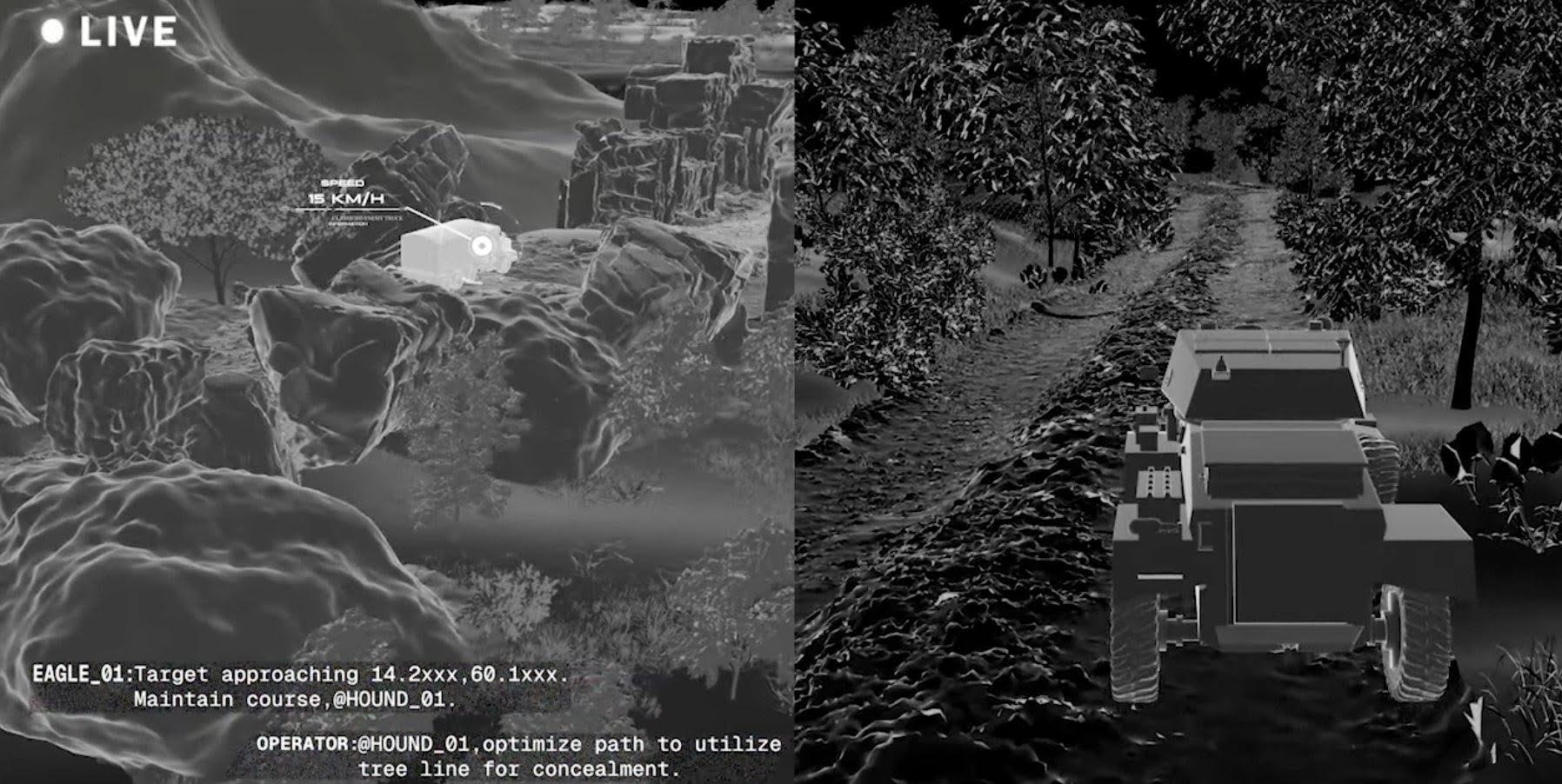
Paar builds its own gimbals, stabilisation, electronics and software, and owns the AI models that run on them. The same building blocks are shared across its products, so adapting its stack to varying platforms, from drones to ground vehicles, ships or counter-drone systems, is seamless.
Why now
A few things have changed at the same time. Electronic warfare has made autonomy a requirement rather than a nice-to-have, because a drone that relies on its operator stops being useful once the link is jammed. Edge computers small enough to sit inside a payload can now run vision and language models in real time. And India's procurement has moved firmly towards companies that own their technology. The FY27 defence budget grew by about 15% to ₹7.85 lakh crore, with 75% of the capital acquisition budget earmarked for domestic industry, and the proposed DAP 2026 calls for Indian ownership of design documents, source code and circuit layouts.
Since Operation Sindoor, nearly every buyer and integrator we have spoken with expects new drone programmes to come with on-board autonomy. Paar sells through platform manufacturers and systems integrators across aerial, naval and terrestrial domains, who incorporate its payloads into their own defence offerings. That means it does not have to wait through direct tender cycles that can take more than three years.
The founder and the team
Vignesh spent four and a half years at Asteria Aerospace, one of India's established defence drone makers, where he joined as the first product hire and went on to become Head of Product. That gave him a close view of what Indian drone makers depend on, and where imported payloads fall short. Before that, he was a robotics product manager at Bossa Nova Robotics in Pittsburgh, which deployed autonomous robots in retail use cases. He holds a master's degree in robotics from Washington University in St. Louis.
That combination is rare in India: autonomy that works in uncontrolled real-world settings, and years spent inside the kind of company Paar now sells to. The engineering team brings experience from organisations including DRDO, Cyient, Asteria Aerospace and Foxconn.
We also got to know the team well before we invested. Among many joint programmes, we co-hosted The Algorithmic Battlefield with Paar during Basecamp, Bengaluru's community tech week in August 2026 — an evening on how AI and autonomous machines are changing India's defence. We look forward to more such collaborations that showcase both Paar's capabilities and progress, and our investment thesis for defence in India.
What we are betting on
Our bet is fairly simple. We believe Indian buyers will keep paying for perception and autonomy as their own line items, rather than taking whatever comes bundled with a platform. We think the data from every deployment will make Paar's models better faster than anyone can copy its hardware. And we expect a stack proven on drones to carry across to ground vehicles, ships and counter-drone systems. Defence is not a fast market, and we expect to be patient partners to Vignesh and the team along the way.
The seed round will take Paar's aerial payloads into serial production, set up a dedicated manufacturing and testing facility in Bengaluru, and complete field validation of NorthStar.
Paar is one of several bets we are making on this next defence paradigm. If you are a founder, engineer or operator building in this space, especially if you have designed, tested or used these systems in the field, we would love to hear from you at mv@advantedge.vc.
Sources
- Axios, The Pentagon's growing costly headache: cheap drones (May 2024)
- Business Standard, Pak used 300–400 drones at 36 sites in infiltration attempts: India (May 2025)
- Kyiv Post, Ukraine's drone output and manufacturer count (2026)
- Al Jazeera, Ukraine's Spiderweb drone assault (June 2025)
- MP-IDSA, Ministry of Defence 2026–27 Budget Estimates: An Analysis (February 2026)
- JSA, Prism: Defence Acquisition Procedure 2026 (March 2026)
- Paar Autonomy