
The Architect Of The EV Ecosystem
Motoring Trends
Vol. 7
Issue No. 3: May-June 2026
p. 72-74
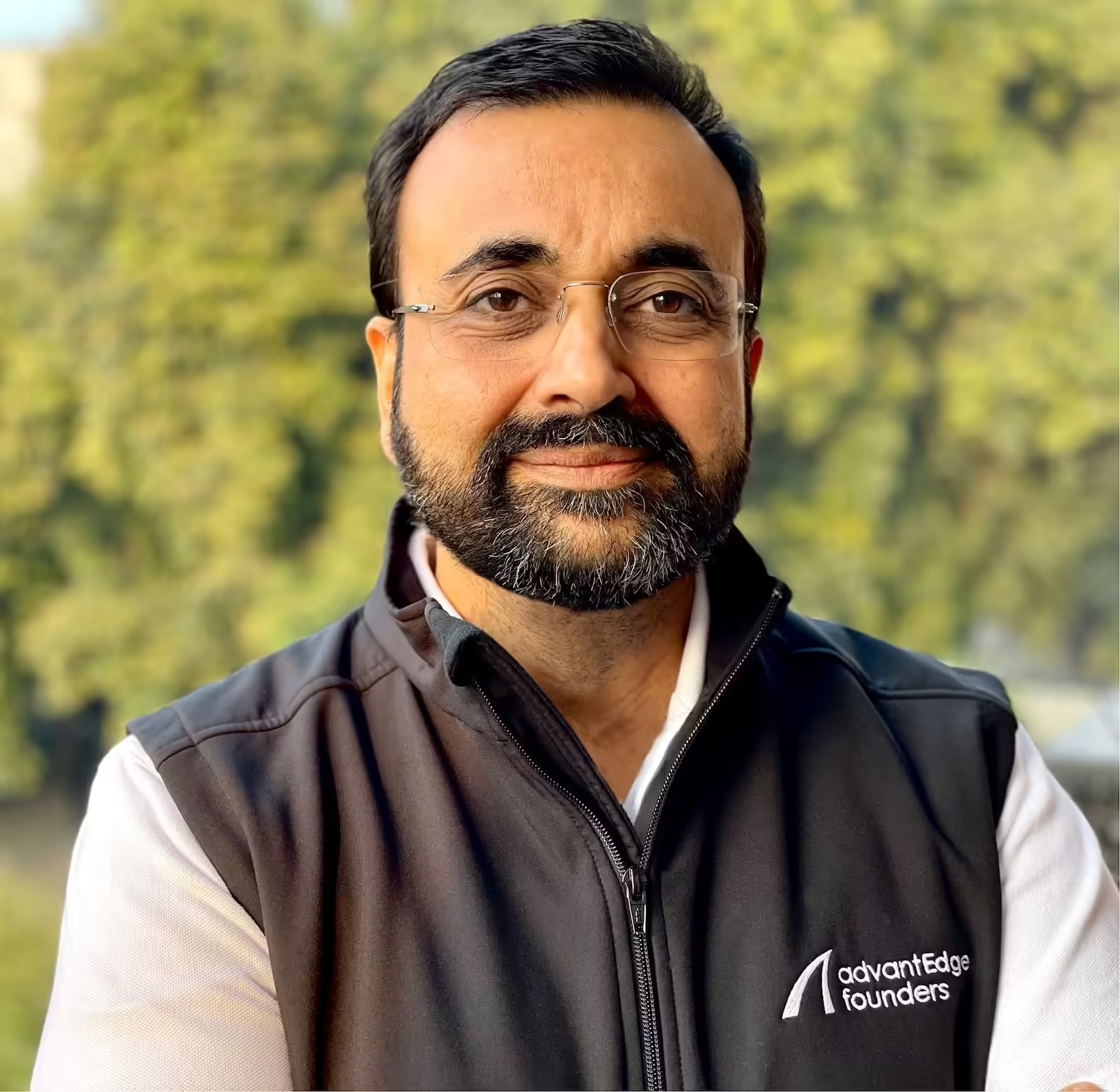
In the bustling landscape of Indian venture capital, Kunal Khattar, Founder of AdvantEdge, spoke to Nilesh Wadhwa, Assistant Editor, Motoring Trends, regarding his trillion-dollar bet on the EV value chain and the strategic ‘flywheel’ that gives his portfolio companies a distinct head start.
The Interview
You’ve been running AdvantEdge since 2015. What was the original spark that led you to transition from being a founder to starting a fund?
"It happened after I exited my previous business, Carnation Auto. I was contemplating my next move when my father suggested, “You can either be an entrepreneur and create one company; instead, don’t you want to help create 100 successful founders?” That was the birth of the business model. I reached out to major players like Motherson Group and Hero MotoCorp, securing commitments from large auto groups.
"I’ve always considered myself a founder first. My fund is also my startup. I had to ask: how do I create a sustainable competitive moat? If capital is all I bring, I can’t compete with the legacy of a Sequoia or an Accel. The answer was to remain a sector-focused fund, which the data shows delivers superior returns."
Your investment style seems more proactive than most. You talk about gap analysis. How does that work in practice?
"We aren’t reactionary. Most funds receive a hundred plans and pick the best, or they are driven by FOMO, fear of missing out. We identify the gaps in our domain where we want to build businesses in. For instance, we saw Gojek’s success in Indonesia and asked why no one was building a bike taxi for India, where two-wheelers make up 65 percent of the market. Rapido was the outcome of that clarity. We look at global models like Flixbus and ask if they can be adapted with an India-first strategy."
You’ve often said that India moves on two wheels and buses, not four. How did that shape your thesis on shared mobility?
"In the US or China, 90–95 percent of mobility is four-wheelers. In India, it’s only eight percent. An average Indian cannot afford an INR 300 Uber ride. We focused on what is affordable and scalable: e-rickshaws, two-wheelers and buses."
You also mentioned that Indian founders are ‘hustlers’. How does the Indian startup psyche differ from developed markets?
"Indian founders are far more resilient and capital-efficient because less capital is available. In the US, you can build a business and take it public in a short sprint. In India, it’s a 10-to-15-year marathon. Here, we often face a ‘first-mover disadvantage’ because you have to solve for so many underlying infrastructural needs — like payments or logistics — that don’t exist yet."
When you’re evaluating a startup, what are the non-negotiables?
"We actually look for reasons not to invest. But primarily, we look for Founder-Market Fit, particularly in deep tech or lending. We want founders who have already gone through the learning curve — the ‘failed’ founder. We actually like backing founders who have failed before. They work twice as hard to prove they are not ‘screw-ups’ and they don’t repeat old mistakes. We are super obsessive about the problem statement — the ‘hair on fire’ problem — rather than just the solution."
Your portfolio is currently heavy on ‘category creators’. How are they performing?
"Between Fund 1 and Fund 2, we’ve made about 36 investments. Nine have become category leaders. Rapido is our most successful outcome, currently valued at USD 3 billion. We have several others in the USD 100 million to USD 500 million range, like Chalo, Exponent Energy and Zingbus."
You are making a massive bet on electric vehicles (EVs). Why focus so heavily on the commercial side rather than personal mobility?
"In India, the motivation for EVs isn’t climate; it’s cost. Commercial vehicles consume 70 percent of our fuel even though they are only 10 percent of the car park. Fuel accounts for 50–60 percent of the cost per kilometre for a delivery rider or a bus operator because our fuel is heavily taxed.
"By 2030, our target is that 100 percent of new vehicle sales for these use cases should be electric. They aren’t doing it for the environment; they are doing it because they are desperate to reduce operating costs by 20–25 percent."
You’ve spoken about ‘Energy as a Service’. How does that change the traditional OEM business model?
"Traditional OEMs make money on the ‘aftermarket’ — oil, filters and parts. EVs don’t have those revenue streams. Therefore, the OEM must own the energy stack. For a company like Exponent Energy, if they sell a USD 1,000 battery, they will sell USD 3,000 worth of energy to that customer over its lifetime. Exponent isn’t just selling batteries; they are here to disrupt Indian Oil."
One of the unique aspects of your fund is how your portfolio companies interact. Is this ‘cross-play’ intentional?
"Absolutely. We have created a flywheel. A shared mobility company needs financing, energy and hardware. In our ecosystem, Zingbus might need an electric bus that can travel 700 km, so Exponent builds it. Bitebeam provides the IoT, AstraNova provides the financing and Pulse Energy provides the charging network.
"Typically, a startup takes 12 to 18 months to find a paying customer. In our ecosystem, we can often sign a customer agreement before the product is even finished."
You also have several strategic LPs like Motherson Group. How do they benefit from this arrangement?
"We are the ‘eyes and ears’ for companies like Motherson Group. A large manufacturer’s DNA is often built for scale, 100 to a million, but they ‘suck’ at the zero-to-one or one-to-10 stage of innovation. It’s synergistic: the startups handle the high-risk innovation, and Motherson Group provides the manufacturing muscle or global customer access when the tech is ready to scale."
You’ve mentioned that you don’t just invest; you ‘venture build’. How does this ecosystem approach actually de-risk a startup in its infancy?
"Being part of a traditional, sector-agnostic VC portfolio is often a lonely journey for a founder. At AdvantEdge, we try to solve for the ‘time-to-market’ friction. When we back a company, we aren’t just looking at their spreadsheet; we are looking at how they plug into our existing portfolio.
"For example, when a new EV player enters our ecosystem, they immediately get access to a ‘sandbox’ of partners. They might get their first pilot with Rapido, their telemetry from Bitebeam and their rapid-charging infrastructure from Exponent. This internal ‘flywheel’ allows them to iterate their product with real-world data much faster than a founder working in a silo. We essentially provide a pre-built value chain that would otherwise take a founder years to assemble."
Does this mean you take a more hands-on approach to the personal development of these founders as well?
"Absolutely. I hold one-on-one calls with my founders for the first two years. These aren’t just board meetings; they are open-ended sessions where we discuss everything from product-market fit to personal mental health and the struggles of being at the top. We want to be the partner they call when things go wrong, not just when they have a good quarter."
One of the major hurdles for EV adoption in India is financing. How are you addressing the ‘credit gap’ for commercial EV drivers?
"This is a critical piece of the puzzle. Traditional banks are hesitant to lend to the ‘gig economy’ workforce because they lack standard credit scores or bank statements. Furthermore, banks don’t understand ‘EV product risk’ — they don’t know the depreciation cycle for an EV or what a battery will be worth in five years.
"We have invested in companies like AstraNova and Exponent One that focus specifically on EV asset risk. Because they understand battery chemistry and charging patterns, they can accurately predict the residual value of the vehicle. We also use technology to mitigate default risk. If a borrower stops paying, we have the ability to remotely immobilise the asset. This level of control allows us to lend to segments that the traditional financial system has completely ignored."
We often see a lack of gender diversity in deep tech and automotive startups. What is your take on why we aren’t seeing more women founders in this space?
"It’s a systemic issue that starts at the educational level. We are funding companies built on STEM foundations — electrical engineering, computer science and hardware design. Historically, the percentage of women in these specific engineering streams has been low, around 8 to 10 percent.
"However, the tide is turning. We have several fantastic women founders in our portfolio, and as more girls enter rigorous engineering courses, we will see that reflected in the startup ecosystem. It’s a top-of-the-funnel problem, not a lack of capability or ambition."
What is your advice to founders in the current climate where AI is the dominant trend?
"Don’t get carried away. If your strength is in batteries or automation, don’t become an AI founder just because that’s where the capital is. If there is poor founder-market fit, you might raise initial cash, but that doesn’t guarantee success long-term. Stick to what you are passionate about."
Finally, what are the major headwinds and tailwinds you see for India over the next few years?
"The geopolitical situation in the Middle East is a tailwind for our sector. High oil prices force the government to think seriously about energy independence. We need energy from every source — coal, renewables and now private-sector nuclear — to ensure the economy has a surplus.
"Our biggest headwind is still infrastructure. We need massive investment in charging networks and power distribution. We are looking at Fund 4 and 5 — tentatively 2030 and 2035 — to potentially focus on hydrogen as that technology matures. We are building the ‘Motherson Group for EV’ and the ‘Indian Oil for EV’. And we are just getting started."